
Contents
Quick Answer
B2B buyers sourcing children's talking pens should not expect universal or public guarantees regarding fixed warranty periods, default defect rates, volume discounts, exclusive regional rights, Amazon brand authorization roles, service level agreements (SLAs), spare parts reserves, or fixed product roadmaps. Instead, professional quality assurance (QA) and service frameworks—such as compliance with toy safety directives [1], supplier quality standards [2], and certification protocols [3]—are established strictly through tailored, bilateral commercial agreements based on specific order quantities, technical specifications, target markets, and compliance requirements. For specific project inquiries, buyers can contact info@readglo.com.
Establishing Professional Quality Assurance Frameworks
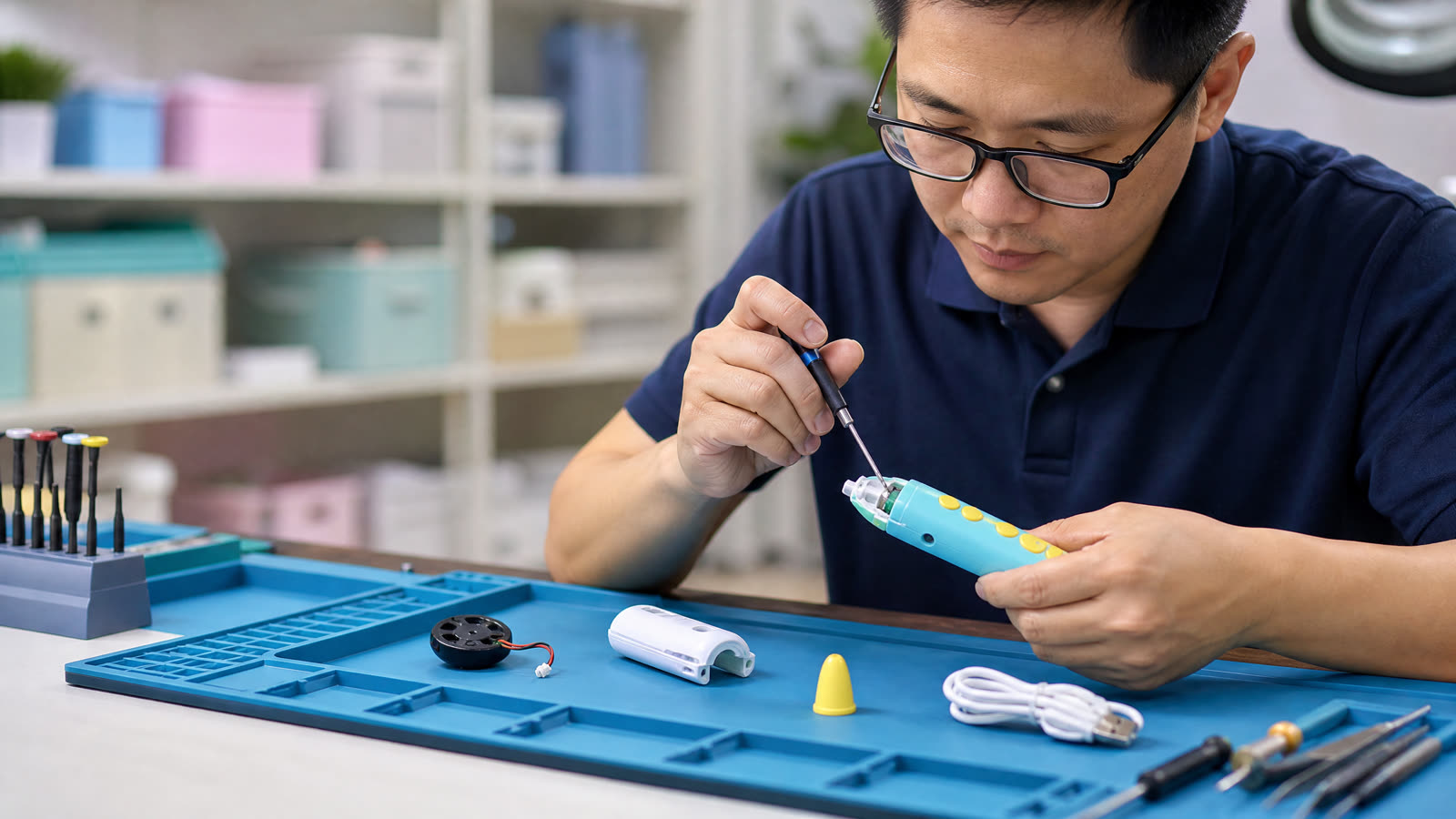
Quality assurance in children's educational electronics requires rigorous alignment with international manufacturing and toy safety standards. Unlike generic consumer electronics, talking pens intended for children must pass stringent chemical, mechanical, and electrical safety evaluations, including regulations governed by the European Commission toy safety directives [1] and North American compliance structures such as the Children's Product Certificate (CPC) [3]. Professional suppliers operate under established supplier quality management guidelines [2] to ensure component traceability, firmware stability, and optical sensor precision. However, actual defect rate thresholds, acceptance quality limit (AQL) standards, and testing protocols are never uniform; they must be negotiated and defined in formal, written purchase agreements tailored to each production batch.
Navigating Warranty Terms and Defect Expectations
Commercial buyers frequently inquire about standard defect rates and post-sale warranty durations. In contract manufacturing for educational publishing and toy brands, there is no standardized industry-wide defect rate or blanket warranty period. Component reliability, battery safety, speaker acoustics, and optical reader durability vary depending on the tier of electronic components selected, target retail pricing, and intended usage intensity. ReadGlo does not promise fixed warranty periods, default defect rates, or standardized spare parts inventories in public articles. All warranty terms, RMA (Return Merchandise Authorization) procedures, and defect threshold clauses are determined on a case-by-case basis through bilateral commercial negotiations aligned with project scope, order volume, and destination market regulations.
Verification Parameters and Supplier Quality Matrix
| Verification Phase | Core Quality Parameter | Applicable Standard / Protocol |
|---|---|---|
| Pre-Production | Raw material compliance & PCB testing | ISO quality management principles [4] |
| During-Production | Optical sensor calibration & acoustic check | ASQ supplier quality guidelines [2] |
| Pre-Shipment | Toy safety drop tests & electrical safety | European Commission toy safety & CPSC CPC [1] [3] |
Table 1: Illustrative B2B Quality Assurance Verification Matrix
To evaluate manufacturing reliability, professional importers utilize structured verification matrices covering pre-production, during-production, and pre-shipment phases. The following matrix illustrates key evaluation parameters commonly addressed in custom B2B production agreements, aligning with recognized supplier quality practices [2].
B2B Written Confirmation and Commercial Boundaries
When structuring long-term OEM or ODM engagements for children's talking pens, procurement teams must follow a rigorous written confirmation process to prevent operational misunderstandings. This includes verifying intellectual property rights, publishing rights alignment [5], and compliance documentation. ReadGlo does not promise fixed warranty periods, defect rates, discounts, exclusive eligibility, Amazon authorization, service level agreements (SLAs), spare parts inventory, or product roadmaps in public articles; all of these elements depend entirely on specific products, order volumes, markets, project plans, compliance requirements, and bilateral written agreements. This is commercial information, not legal advice; have a qualified lawyer review any agreement before signing. Buyers seeking tailored project validation can reach out directly via email at info@readglo.com.
References
1. European Commission. Toy Safety Directives and Harmonized Standards.
2. American Society for Quality (ASQ). Supplier Quality Management Resource Guide.
3. Consumer Product Safety Commission (CPSC). Children's Product Certificate (CPC) Guidelines.
4. International Organization for Standardization (ISO). ISO Quality Management Standards.
5. World Intellectual Property Organization (WIPO). Publishing Industry and Copyright Guidelines.