
Contents
Why Packaging Is Your Most Important Marketing Asset
In the educational toy market, packaging is not just a container — it is the primary marketing communication vehicle for the majority of purchase decisions. Research by the Paper and Packaging Board found that 72% of consumers say packaging design influences their purchase decision, and in the children's toy category, this figure is even higher due to the visual and tactile nature of the purchase environment.
For B2B buyers — distributors, retailers, and private label brands — packaging design decisions have direct implications for sell-through rates, return rates, and brand equity. This guide covers the key principles of effective educational toy packaging design, from structural engineering to regulatory compliance.
Structural Design Principles
Retail Environment Optimization Packaging must perform across multiple retail environments: traditional brick-and-mortar shelves, e-commerce fulfillment (where packaging must survive shipping without additional protection), and club store formats (where oversized packaging is often required). Design for the most demanding environment first, then optimize for others.
Visibility and Shelf Impact The "billboard effect" — the visual impact of multiple identical packages on a shelf — is a critical consideration for retail packaging. Strong color blocking, consistent brand elements, and clear product photography create a powerful shelf presence. For reading pens, showing the product in use (a child holding the pen over a book) is consistently more effective than product-only photography.
Unboxing Experience E-commerce has elevated the importance of the unboxing experience as a marketing moment. Packaging that creates a positive unboxing experience generates user-created content on social media, which is particularly valuable for children's products. Consider: tissue paper inserts, branded ribbon pulls, personalized thank-you cards, and structured interior packaging that presents the product attractively.
Structural Integrity Children's toy packaging must withstand rough handling in retail environments and during shipping. Key structural requirements include: minimum 3-ply corrugated for outer shipping cartons, adequate void fill to prevent product movement, and sufficient compression strength to survive stacking in warehouse environments.
Regulatory Requirements for Packaging
Warning Labels Children's products require specific warning labels depending on the age range and product features. For reading pens, standard warnings include: choking hazard warnings for products with small parts (required for products intended for children under 3), battery warnings (required for products with non-rechargeable batteries), and hearing safety warnings (required in some markets for audio devices).
Age Grading Age grading must be prominently displayed on packaging. In the EU, age grading is governed by the Toy Safety Directive and must be based on safety testing results, not just marketing considerations. In the US, ASTM F963 provides guidance on age grading criteria.
Country of Origin Country of origin marking is required in most markets. For products manufactured in China, "Made in China" must appear on the product and packaging in the language of the destination market.
EU Packaging Regulation The EU's new Packaging and Packaging Waste Regulation (PPWR), expected to be fully implemented by 2030, introduces mandatory recycled content requirements and recyclability standards. Brands planning for the European market should begin transitioning to compliant packaging materials now to avoid future disruption.
Cost Optimization Without Compromising Quality
Packaging costs typically represent 15–30% of the total product cost for reading pens. Here are proven strategies for reducing packaging costs without compromising quality or brand perception:
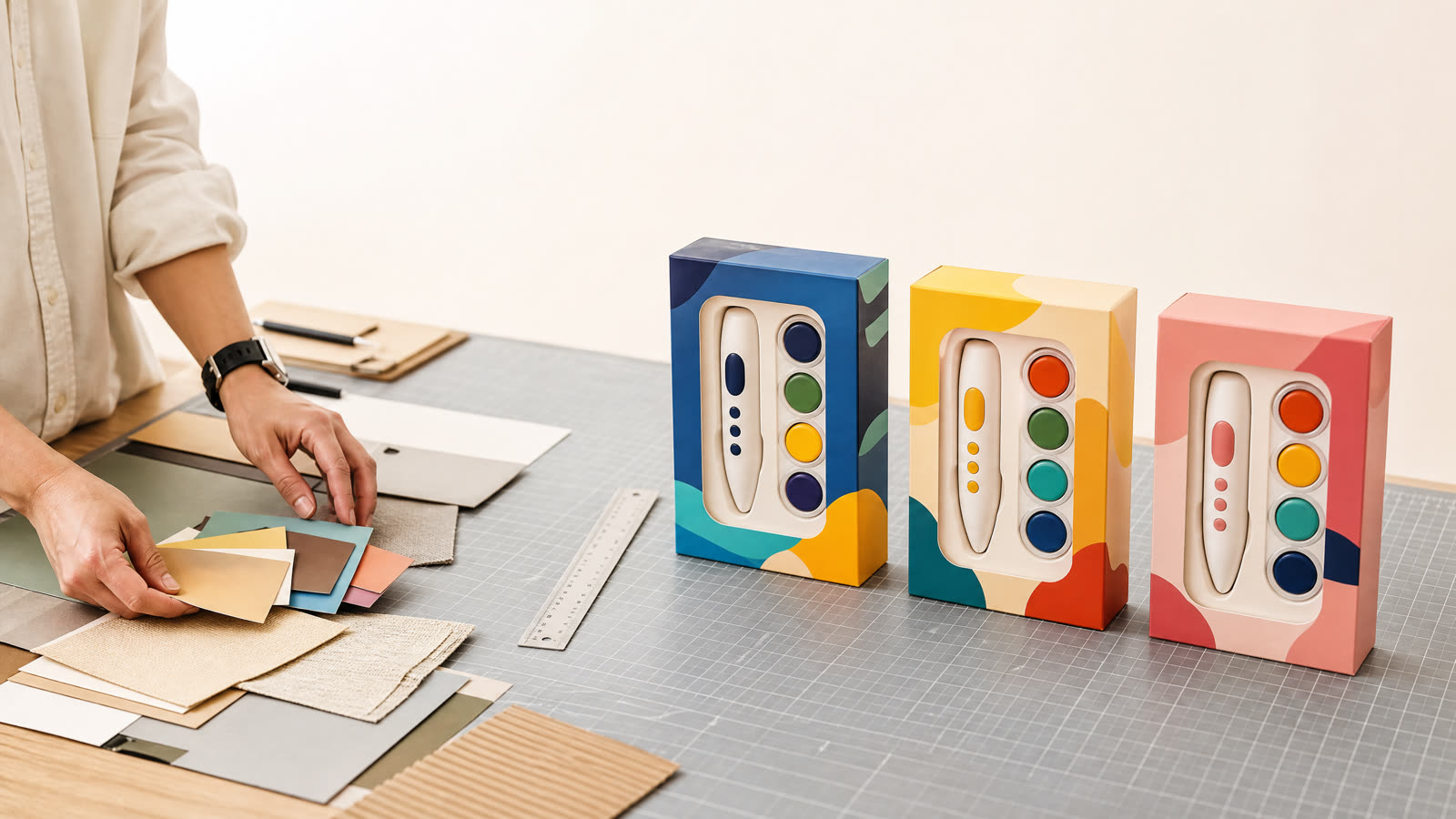
Standardize Structural Formats Using a standard box size across multiple SKUs reduces tooling costs and simplifies inventory management. Design a modular packaging system where the same structural format can accommodate different products with different graphic designs.
Optimize Material Specifications Work with your packaging supplier to identify the minimum material specifications that meet structural requirements. Reducing board weight from 350gsm to 300gsm, for example, can reduce material costs by 10–15% with minimal impact on perceived quality.
Consolidate Printing Printing multiple packaging variants in a single press run reduces setup costs. If you have multiple SKUs with similar packaging structures, coordinate production schedules to enable gang printing.
Sustainable Materials as Cost Opportunity Contrary to common perception, some sustainable packaging materials are cost-competitive with conventional alternatives. Recycled content board, for example, is often priced similarly to virgin board while providing sustainability credentials that support premium positioning and retailer requirements.
Continue with ReadGlo
View the configurable pen platform used for OEM reading-pen programs.