
Contents
Direct Answer
For global importers, educational institutions, and specialized distributors, procuring Quran reading pens is more than a simple hardware purchase; it is an investment in educational technology that requires high precision, content integrity, and hardware reliability. A direct factory for Quran reading pens must bridge the gap between sophisticated Optical Identification (OID) technology and the sacred accuracy required for Quranic recitation. To successfully navigate this market, professional buyers must evaluate a factory based on its technical implementation of word-by-word translation, the breadth of its reciter library, and its adherence to international safety and quality standards.
Direct Answer for B2B Buyers: When selecting a direct factory for Quran reading pens, prioritize manufacturers that demonstrate expertise in OID 2.0 or 3.0 technology, offer high-fidelity audio with at least 8GB of internal storage, and provide a transparent verification framework for content accuracy. A responsible supplier should facilitate independent audits of their production lines and offer comprehensive documentation for battery safety and electromagnetic compatibility (EMC).
The Technology Behind Precision: OID and Translation Mapping
The core of a modern Quran reading pen lies in its ability to interact seamlessly with printed media. Unlike traditional scanning pens that rely on Optical Character Recognition (OCR), Quran reading pens utilize Optical Identification (OID) technology.
**How OID (Optical Identification) Drives Interactive Learning
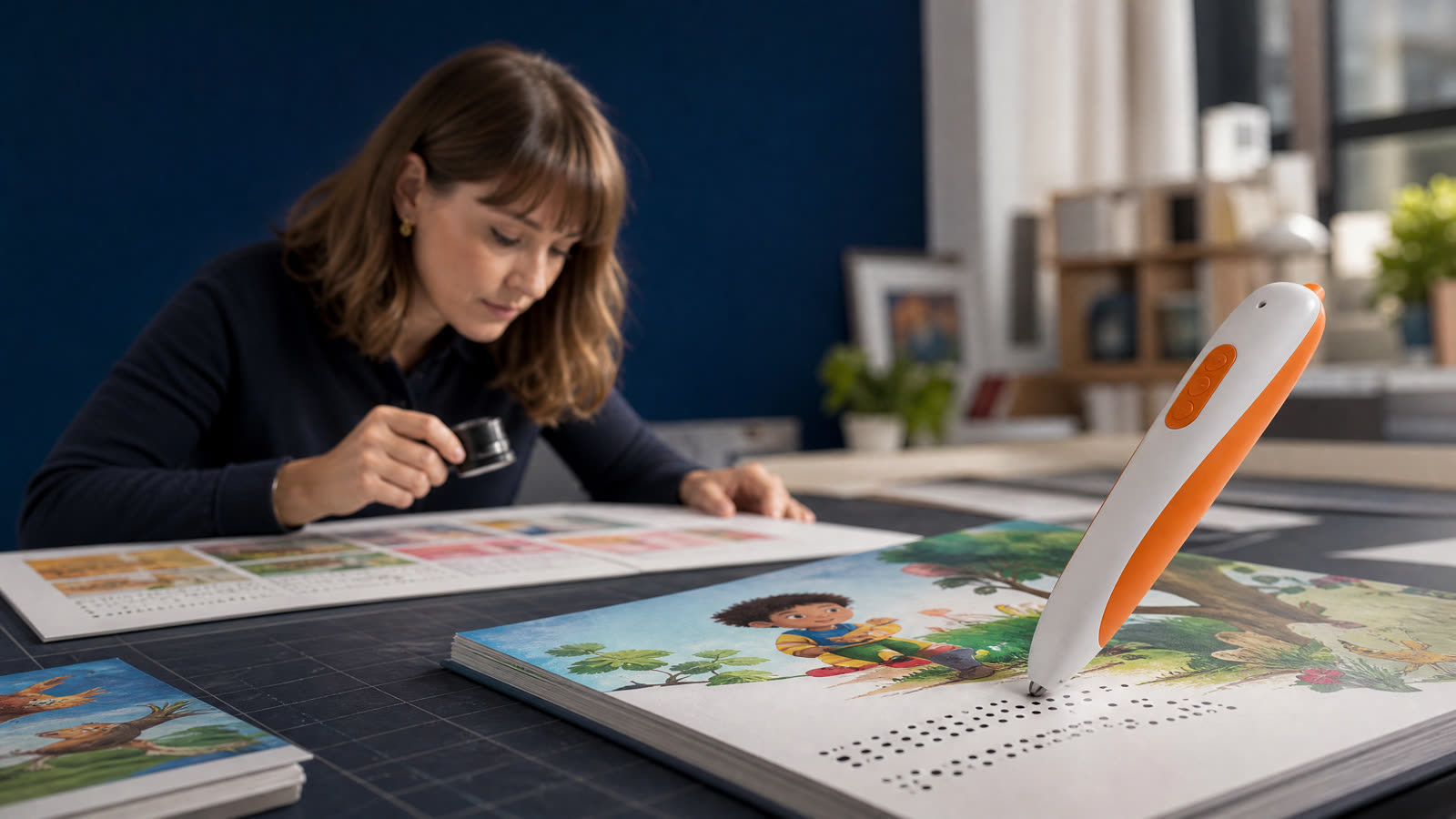
OID technology functions by embedding nearly invisible micro-codes on the printed page. These codes are arranged in a specific grid that the pen's CMOS sensor can detect and decode in real-time. When a user touches the pen tip to a word or verse, the pen identifies the unique code and triggers the corresponding audio file from its internal memory.
For B2B buyers, the quality of the OID implementation is critical. High-quality sensors ensure that the pen responds at various angles and under different lighting conditions. Factories utilizing OID 3.0 technology generally offer higher resolution and faster response times compared to older iterations, which is vital for maintaining the flow of recitation during learning sessions.
**Achieving Seamless Word-by-Word Translation
Word-by-word translation is one of the most requested features for educational Quran pens, as it allows students to understand the linguistic nuances of the Arabic text. This requires a complex mapping process where each individual word in the printed Quran is assigned a specific OID code linked to a dedicated audio segment.
A professional factory must have a robust content management system to ensure that the audio translation perfectly matches the printed word. Buyers should inquire about the factory’s process for "mapping" and how they handle different scripts (such as Indo-Pak or Uthmani) to ensure that the interactive experience is consistent across all versions of the text.
Critical Specifications for B2B Procurement
| Feature | Standard Specification | Professional/Premium Grade |
|---|---|---|
| **Technology** | OID 2.0 | OID 3.0 (High Resolution) |
| **Storage Capacity** | 4GB - 8GB | 16GB - 32GB |
| **Audio Format** | MP3 / WAV (Standard) | High-Bitrate Compressed Audio |
| **Battery Capacity** | 300mAh - 400mAh | 500mAh - 650mAh |
| **Charging Interface** | Micro-USB | USB Type-C (Fast Charging) |
| **Shell Material** | Standard ABS Plastic | Eco-friendly, Reinforced ABS |
When drafting a Request for Quotation (RFQ), procurement officers must look beyond the aesthetic design of the pen and focus on the internal specifications that determine the device's longevity and user experience.
**Audio Quality and Multi-Reciter Support
The primary value of a Quran reading pen is its audio output. High-fidelity speakers are essential for clear articulation, which is necessary for students learning Tajweed (the rules of recitation). Furthermore, the ability to switch between multiple reciters—such as Al-Sudais, Al-Shuraim, or Al-Afasy—requires significant storage capacity.
Most professional-grade pens now come with a minimum of 8GB to 32GB of internal flash memory. This allows the device to house not only multiple reciters but also dozens of translations in various languages, including English, Urdu, French, and Indonesian.
**Hardware Durability and Battery Performance
Given that these devices are often used in classroom settings or by children, durability is paramount. A responsible supplier should conduct drop tests and button-press endurance tests. Additionally, the battery life is a key differentiator. Buyers should verify the milliampere-hour (mAh) rating of the lithium-ion batteries and request test reports concerning battery cycle life and safety.
Content Integrity and Customization for Educational Brands
For publishers and educational brands, the ability to customize both the hardware and the software is a significant competitive advantage.
**Verifying the Accuracy of Recitations and Translations
Content accuracy is non-negotiable when dealing with religious texts. A responsible supplier should be able to provide the source of their audio and text databases. Buyers are strongly advised to have a qualified linguist or religious scholar review samples from the factory before proceeding with mass production.
Furthermore, buyers should ask: "How does the factory verify that the audio file for a specific verse matches the printed text in the book?" A reliable manufacturer will have a dedicated Quality Assurance (QA) team specifically for content verification, separate from the hardware QA team.
**OEM/ODM Opportunities for Publishers
Many B2B buyers are publishers who already have their own printed Quranic materials. A direct factory with strong Research and Development (R&D) capabilities can offer ODM (Original Design Manufacturing) services to print OID codes onto the publisher's existing books. This process involves adding a specialized CMYK layer during the printing process, where the 'K' (Black) layer contains the OID codes.
For inquiries regarding custom content mapping or OEM hardware design, professional buyers can reach out to the technical team at info@readglo.com for a detailed consultation on integration possibilities.
A B2B Buyer’s Verification Framework
Due to the specialized nature of these devices, a standard factory inspection is often insufficient. A more targeted verification framework is required to ensure long-term success.
**Factory Audit and Production Capacity
Before finalizing a partnership, importers should request a factory audit. This audit should cover: 1. Clean Room Standards: The assembly of optical sensors requires a dust-free environment to prevent sensor failure. 2. Testing Equipment: Verify the presence of aging test racks, battery testers, and audio analyzers. 3. R&D Strength: A factory that employs its own software engineers is better equipped to handle firmware updates and custom feature requests.
**Compliance and Safety Standards
While specific certifications can vary by market, general compliance is a baseline for quality. Buyers should request documentation regarding: * Electromagnetic Compatibility (EMC): Ensuring the device does not interfere with other electronics. * Chemical Safety: Verification that the materials used in the pen's shell are non-toxic and safe for children (often aligned with EN71 or similar standards). * Battery Safety: Documentation such as UN38.3 or MSDS for the shipping and handling of lithium batteries.
It is important to note that a responsible supplier will encourage buyers to verify these documents directly with the issuing testing laboratories.
Logistics and After-Sales Support in Global Distribution
The relationship with a direct factory does not end at the warehouse gate. For distributors, after-sales support is critical for maintaining brand reputation.
1. Firmware Updates: As new reciters or translations become available, the factory should provide a simple method for users to update their devices via USB. 2. Defect Rate Management: A professional factory typically maintains a defect rate of less than 1-2% and should offer a clear policy for replacement units or spare parts. 3. Shipping Expertise: Given the sensitive nature of electronics and batteries, the factory should demonstrate experience in international logistics, ensuring that all products are packed to withstand long-distance transit.
Deep Dive: The Evolution of OID Technology and Its Impact on Learning
To appreciate the value offered by a direct factory, one must understand the technical trajectory of Optical Identification (OID). The industry has transitioned through several generations, each offering significant improvements in data density and user interaction.
**OID 1.0 to OID 3.0: A Technical Comparison
Early iterations of reading pens utilized OID 1.0, which had limited code capacity and required high-contrast printing. This often resulted in a visible "grayish" tint on the pages, which could be distracting for readers. OID 2.0 improved this by utilizing smaller dot patterns that were less visible to the naked eye while increasing the number of unique codes available.
Today, the leading factories utilize OID 3.0. This generation offers several advantages for B2B buyers, including virtually invisible dot patterns that preserve the aesthetic of the Quran, and a high-resolution CMOS sensor that can read codes at an angle of up to 45 degrees. Furthermore, OID 3.0 supports hundreds of thousands of unique indices, enabling complex word-by-word translation across the entire 604 pages of the Quran.
**The Content Mapping Process: Behind the Scenes
A functional word-by-word Quran pen requires a meticulous "mapping" phase. The factory’s design team takes the digital file of the Quran and overlays the OID code layer, assigning each word a specific X-Y coordinate. Simultaneously, full recitations are spliced into over 77,000 individual audio clips. A database then links each coordinate to its corresponding audio file. A responsible supplier should demonstrate a robust verification loop, including automated scripts and manual testing, to ensure that every link is accurate before mass production begins.
ReadGlo project support
Send Your Requirements
Share your target market, product scope, expected quantity and launch timing. Our team can prepare a relevant product, content or quality-control discussion.
The Quality Control Workflow in Professional Manufacturing

A direct factory’s commitment to quality is best evidenced by its internal testing protocols. In the production of Quran reading pens, quality control is divided into three primary phases: Incoming Quality Control (IQC), In-Process Quality Control (IPQC), and Final Quality Control (FQC).
**The Quality Control Workflow
A direct factory’s commitment to quality is evidenced by its internal testing protocols. Incoming Quality Control (IQC) involves vetting sensors, stress-testing batteries, and ensuring the purity of ABS plastics. During assembly, In-Process Quality Control (IPQC) focuses on optical alignment, soldering integrity, and firmware flashing. The process concludes with Final Quality Control (FQC), which includes audio fidelity tests using acoustic analyzers, aging tests to identify early electronic failures, and a final manual check against the printed Quran to ensure perfect interaction.
Future Trends: AI and Cloud Connectivity in Quran Pens
As we look toward the future of educational technology, direct factories are beginning to integrate Artificial Intelligence (AI) and cloud-based features into their designs.
AI-Powered Pronunciation Correction Some advanced factories are experimenting with Voice Recognition AI**. Instead of just reciting the text, the pen can "listen" to the student's recitation and provide real-time feedback on their Tajweed. This requires a more powerful processor and a high-quality microphone, which are becoming more common in premium-grade models.
**Cloud Synchronization and Mobile Apps Modern B2B buyers are increasingly looking for "Hybrid" solutions. This involves a reading pen that can sync via Bluetooth to a mobile app. The app can track the student’s progress, highlight areas for improvement, and allow parents or teachers to monitor learning outcomes remotely.
For distributors looking to stay ahead of the curve, inquiring about these R&D projects is essential. If you are interested in exploring how AI and cloud connectivity can be integrated into your next product line, please reach out to our innovation team at info@readglo.com.
The Strategic Importance of the "Direct Factory" Relationship
For an overseas distributor, the decision to work with a direct factory rather than a trading company is strategic. A direct relationship allows for: * Transparency in Lead Times: Direct communication with the production manager provides more accurate shipping dates. * Cost Efficiency: Eliminating the middleman allows for more competitive pricing, which is crucial for large-scale institutional tenders. * Technical Customization: Direct access to the factory’s engineering team allows for the development of unique features that can differentiate a brand in a crowded market.
However, this relationship requires a high degree of due diligence. A responsible supplier should be willing to provide references from other international clients (within the bounds of confidentiality) and should be open to third-party inspections from firms like SGS or Intertek.
Summary of Procurement Best Practices
To summarize, a successful B2B procurement strategy for Quran reading pens should follow these steps: 1. Define Technical Requirements: Specify OID version, memory size, and battery capacity. 2. Verify Content Source: Ensure the audio and text are from reputable and authorized sources. 3. Request Samples: Test the physical durability and the accuracy of the word-by-word mapping. 4. Audit the Factory: Focus on the clean room environment and the rigor of the FQC process. 5. Review Compliance: Ensure all safety and battery documentation is current and verifiable.
By following this framework, buyers can mitigate the risks associated with electronic educational tools and build a sustainable, high-quality product line for their customers.
For any questions regarding our manufacturing process, technical support, or to request a sample for evaluation, please contact us at info@readglo.com. Our team is ready to assist you in bringing high-quality Quranic education technology to your market.
Conclusion
Selecting a direct factory for Quran reading pens requires a balanced focus on advanced OID technology, content precision, and rigorous hardware standards. By utilizing a comprehensive verification framework—focusing on technical specifications, content accuracy, and compliance—B2B buyers can ensure they are providing high-quality, reliable educational tools to their respective markets. A responsible manufacturing partner will always prioritize transparency, offering clear documentation and technical support throughout the procurement process.
For further information on wholesale opportunities, technical specifications, or custom educational content development, please contact our B2B department at info@readglo.com.
Continue with ReadGlo
Review the Arabic-content reading-pen platform for market-specific programs.
ReadGlo project support
Get a Project Quote
Request product specifications, sample guidance or a tailored proposal for your reading pen, interactive book or distributor program.