
Contents
Why Amazon FBA Is the Right Channel for Reading Pens
Amazon's Fulfillment by Amazon (FBA) program has transformed the reading pen market by enabling small and medium-sized brands to reach millions of consumers without the infrastructure investment required for traditional retail distribution. For private label sellers, Amazon FBA offers a compelling combination of massive reach, trusted fulfillment, and powerful search discovery.
The reading pen category on Amazon has grown significantly over the past five years, driven by increasing parental awareness of the technology and the growth of the bilingual education market. However, the category has also become more competitive, with established brands, private label sellers, and direct-from-China listings all competing for the same customers. Success requires a systematic approach to product selection, sourcing, listing optimization, and launch strategy.
Product Selection: Finding Your Niche
Category Research Use Amazon's Best Seller Rank (BSR) data, combined with third-party tools such as Jungle Scout or Helium 10, to identify reading pen subcategories with strong demand and manageable competition. Key metrics to evaluate: monthly sales volume (target: 300+ units/month for the top 3 sellers), review count (target: enter a subcategory where top sellers have fewer than 500 reviews), and price point (target: $25–$80 for optimal margin and conversion rate).
Differentiation Strategy The most successful Amazon private label reading pen brands differentiate on: language niche (Spanish-English, Arabic-English, Chinese-English — these niches have lower competition than general English reading pens), age-specific content (toddler, preschool, early reader — each has distinct content and hardware requirements), and content theme (STEM, language arts, cultural heritage — thematic positioning enables premium pricing).
Avoiding Common Mistakes Do not enter a subcategory dominated by a brand with 1,000+ reviews and a BSR under 500 — the customer acquisition cost to displace an established brand is prohibitive. Do not source a product that is identical to existing listings — Amazon's algorithm penalizes duplicate listings and customers will choose the established brand over a new entrant.
Sourcing Strategy for Amazon Sellers
Finding the Right Manufacturer For Amazon private label sellers, the ideal manufacturer has: existing Amazon-compatible products (familiar with FBA requirements including FNSKU labeling, poly bagging, and carton marking), CE/FCC/ASTM F963 certifications already in place, willingness to work with small initial orders (500–1,000 units), and English-speaking sales and support staff.
Sample Evaluation Before placing a production order, evaluate samples rigorously: test DOT code recognition accuracy across multiple books, evaluate audio quality at different volume levels, assess build quality and durability through drop testing, and compare against top-selling Amazon listings in your target subcategory.
Pricing and Margin Calculation Amazon FBA sellers should target a minimum 3x markup on landed cost (product cost + shipping + import duties). For a reading pen with a $15 landed cost, the target selling price is $45–$55. Amazon fees (FBA fulfillment, referral fee, storage) typically total 35–40% of the selling price, leaving a gross margin of 25–30% before advertising spend.
Inventory Planning Amazon FBA requires careful inventory planning to avoid stockouts (which damage BSR and ranking) and excess inventory (which incurs storage fees). For a new product launch, order 3–4 months of projected sales in the initial order, with a reorder triggered when inventory drops to 6–8 weeks of supply.
Listing Optimization for Maximum Visibility
Title Optimization Amazon titles should include: brand name, primary keyword (e.g., "Reading Pen for Kids"), key differentiator (e.g., "Bilingual English Spanish"), age range, and a key feature. Example: "ReadGlo Bilingual Reading Pen for Kids Ages 3-8 | English Spanish | 200+ Books Compatible | Talking Pen with Audio Books."
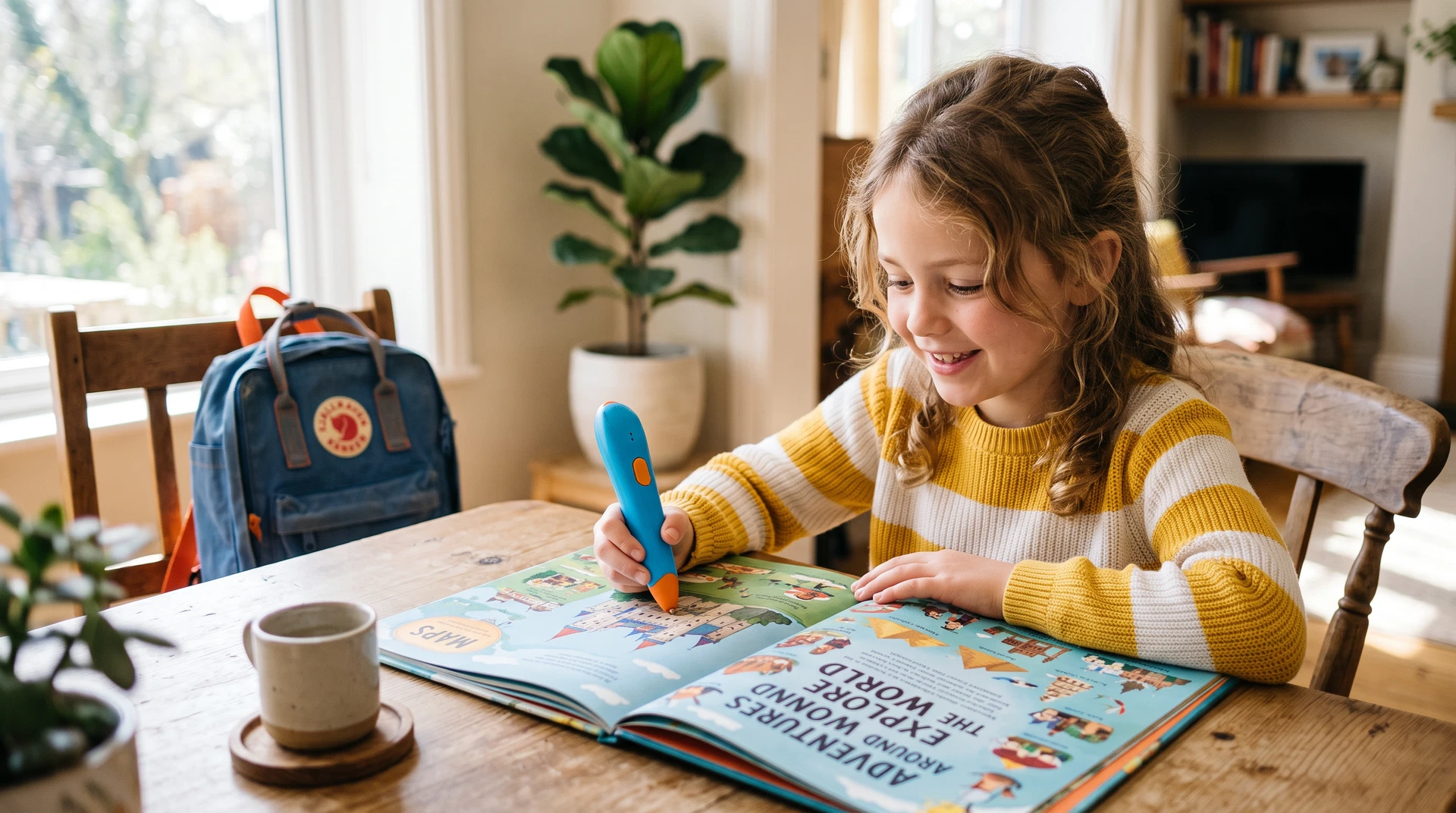
Image Strategy Amazon allows up to 9 images. Use them strategically: main image (white background, product only — required by Amazon), lifestyle image (child using the pen with a book), feature callout images (highlight key features with text overlays), comparison chart (your product vs. competitors), and video (30–60 seconds showing the product in use — video significantly increases conversion rate).
A+ Content Brand-registered sellers can use A+ Content (formerly Enhanced Brand Content) to add rich media to their product description. A+ Content consistently increases conversion rates by 5–10%. Include: brand story, product feature deep-dive, comparison table with other products in your line, and FAQ section addressing common customer questions.
Review Strategy Reviews are the single most important factor in Amazon conversion rate. Legitimate review acquisition strategies include: Amazon's Request a Review button (sends automated review request to all buyers), Amazon Vine program (for new products with fewer than 30 reviews), and excellent customer service that proactively resolves issues before they become negative reviews.
Continue with ReadGlo
See product specifications and request model-specific documentation.