
Contents
Direct Answer
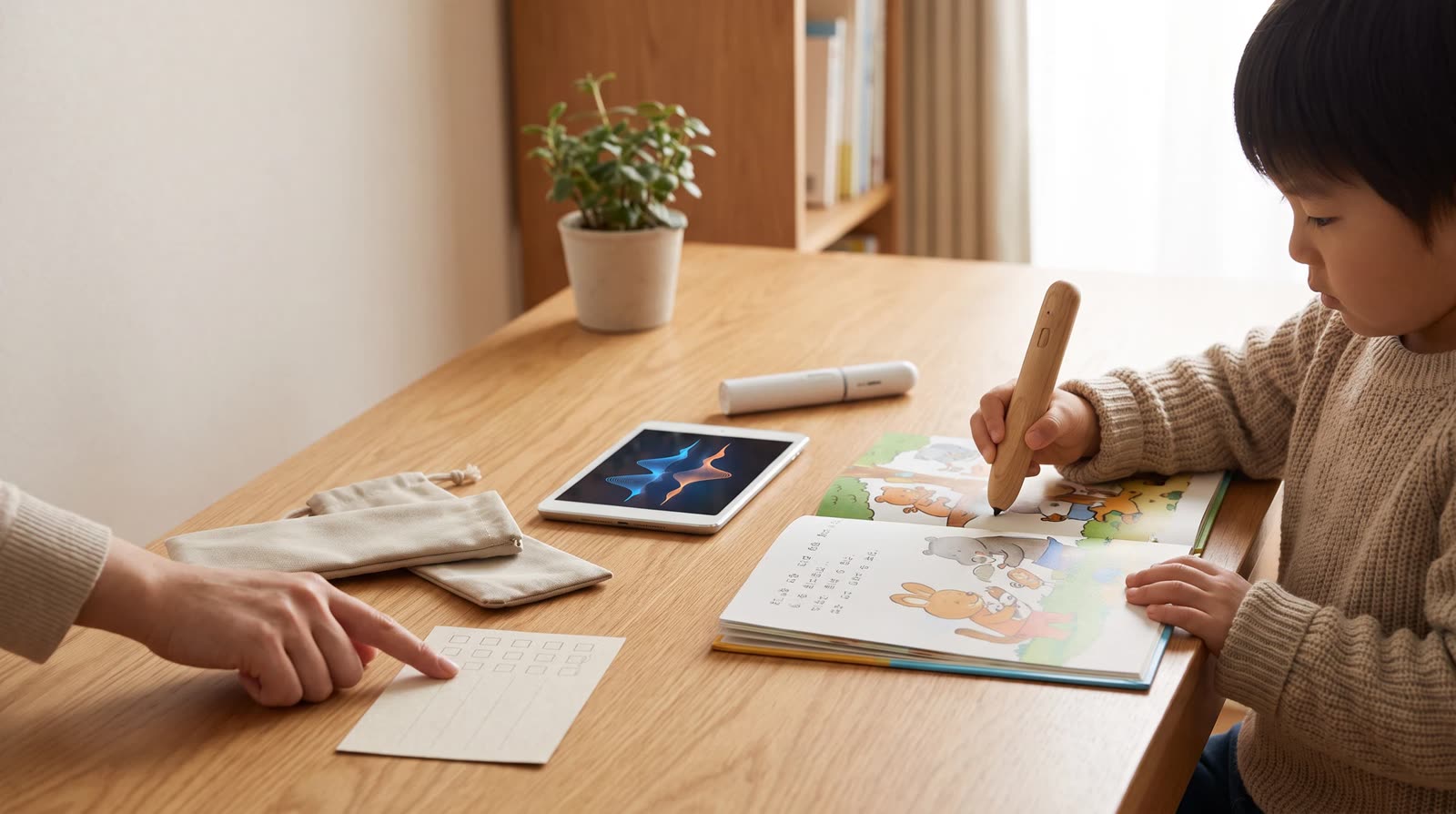
Reading Pen Supplier Checklist: 25 Questions for Your First Factory Call is most useful when a buyer converts an intended reading-pen programme into a controlled decision process. The first step is not to seek a universal promise about price, timing, capability or compliance. It is to define the specific users, interactive books or learning materials, product bundle, market, channel, approval owners and desired next decision. a first supplier discovery call should then be managed with written assumptions, buyer-owned evidence and a clear route for unresolved questions.
Start with a Buyer-Owned Scope
Before a quotation, sample request, factory visit or launch conversation, describe the release in plain language. What is the intended user group? Which product and accessories are being considered? Is the book or audio content supplied, proposed or still under editorial review? Which markets and channels are in scope? Which brand claims may be used, and who is allowed to approve them?
This record makes separating basic eligibility questions from release-specific evidence requests. It also stops a common B2B problem: different parties may respond to different assumptions, then later discover that the artwork, audio, packaging, software expectation or shipping route was not included in the same way. A one-page scope note cannot replace a contract or specialist review, but it gives the project a reliable start point.
Use Evidence Gates Rather Than Assumptions
| Decision area | Buyer question | Useful record |
|---|---|---|
| Scope | What is included in this release? | Dated product-and-bundle brief |
| Content | Who approves the files and claims? | Rights and approval register |
| Review | What evidence is required next? | Sample, proof or document checklist |
| Market | What needs destination-specific review? | Market responsibility checklist |
| Handover | Who receives the final record? | Release note and escalation contacts |
A buyer-side decision table for the final project rather than a generic supplier promise.
A buyer can use four practical gates. First, confirm the commercial scope: the proposed product, bundle, target market and channel. Second, confirm the content and brand scope: which files are authorised for discussion and who approves them. Third, confirm the review scope: what a representative sample, proof, demonstration or document must show. Fourth, confirm the release scope: which final decision owner signs off the current configuration.
At each gate, label unresolved items clearly. A proposed feature is not the same as a final specification. A generic sample is not the same as the buyer’s approved release. A document for one market or previous order is not automatically relevant to another. The objective is to make follow-up questions more useful and to avoid a late change becoming an unpriced or unreviewed obligation.
Practical Checklist for a first supplier discovery call
Ask suppliers and internal stakeholders questions that can be answered with a current record. The useful starting evidence is the buyer’s use case, proposed SKU, content status, channel and decision timetable.
- Confirm the proposed product, accessories, packaging and learning-material scope.
- Name the buyer contact for commercial decisions, content approvals and market-facing copy.
- Record which files and product details are final, illustrative or still under review.
- Define what must be assessed in the next sample, proof, demonstration or supplier response.
- Keep revision dates and owners visible when any assumption changes.
- Request clarification where a proposed service, commercial point or product statement has not been tied to the final release.
This is also a conversion tool. A buyer who provides an organised brief can receive a focused response through the ReadGlo contact page rather than a broad catalogue reply that may not answer the actual project question.
Keep Content, Brand and IP Decisions Explicit
Interactive reading-pen programmes often involve several kinds of buyer-controlled assets: a book edition, illustrations, recordings, translations, branding, packaging copy and an interaction plan. Rights, permitted territories, attribution conditions and approval routes may differ by asset. A manufacturer, printer, distributor or logistics provider should not be treated as automatically authorised to reuse an asset, represent its religious or educational approval, or extend a claim beyond the buyer’s written instruction.
For any final release, maintain a buyer-owned register that identifies the asset, source, version, rights holder or authorised reviewer where applicable, permitted medium and territory, and the person who approved its use. If a file changes, decide whether an earlier approval still applies. This protects the buyer’s brand, makes handovers more practical and prevents an illustrative file from becoming an assumed production instruction.
ReadGlo project support
Send Your Requirements
Share your target market, product scope, expected quantity and launch timing. Our team can prepare a relevant product, content or quality-control discussion.
Prepare the Next Handover
The next handover may be from buyer to supplier, publisher to prepress partner, factory to inspector, or importer to distributor. It should contain the current brief, version reference, approved assets, open questions, named decision owners and the exact evidence required before the next gate. If a team cannot tell which file, model, component or claim is current, it should pause and resolve the ambiguity before extending the release.
For operational planning, identify who manages the sample request, who reviews the product-and-content interaction, who owns retailer copy, and who works with the responsible shipper or forwarder. The aim is not to place every obligation on one party. It is to prevent an unassigned question from becoming a customer, channel or shipment problem later.
Review the Final Market and Shipment Path
Product, packaging and shipment obligations depend on the final configuration, intended users, destination and transport route. CPSC explains that applicable requirements can be product-specific, while the European Commission describes the obligations that apply to toys placed on the EU market. For battery-powered products, IATA notes that air-transport requirements can depend on the battery configuration and rating. Treat these sources as prompts for a final project review with the responsible professional, shipper and forwarder, not as proof that a proposed reading pen is compliant or ready for every market.
Frequently Asked Questions
What should a buyer prepare before a first supplier discovery call?
Prepare the intended users, target market, channel, proposed product-and-book scope, named approvers and decision timetable. State what is known and what still needs evidence so each party responds to the same brief.
Can a supplier’s standard specification replace a project brief?
No. A standard specification can start a discussion, but the buyer should approve a project-specific record covering the actual model, bundle, content state, packaging, claims and release assumptions.
Who should control content and brand approvals?
The buyer should name the rights, editorial and brand approvers for the assets it supplies or plans to use. Keep approvals with the version of the relevant file rather than treating a previous email as a continuing permission.
How should different supplier proposals be compared?
Use the same written scope and compare the evidence, exclusions, assumptions and named responsibilities. Do not compare numbers or feature lists until the buyer has confirmed that they refer to the same intended release.
What should happen when a sample, book file or bundle changes?
Log the change, affected component, owner, reason, required evidence and approval decision. Decide whether the change requires a revised quotation, proof, sample, market review or customer-facing copy.
Can generic compliance or performance language be used in a product listing?
Only use approved product facts that match the final configuration and evidence for the relevant market. Route unverified performance, certification, rights and suitability language to the responsible reviewer before publication.
What is the practical output of a first supplier discovery call?
A dated, buyer-owned decision record covering the buyer’s use case, proposed SKU, content status, channel and decision timetable. It gives suppliers a clearer request, supports a more relevant quotation or sample discussion, and provides an escalation route if the project changes.
Conclusion
Reading Pen Supplier Checklist: 25 Questions for Your First Factory Call should lead to a clearer buyer decision, not a generic promise. Use a controlled scope, named approval owners and release-specific evidence before you compare offers or communicate with a market. To discuss a project scope, review the Smart Reading Pen product route and send your requirements to ReadGlo. You can also explore related procurement resources in the Blog Hub.
Further Reading
For final decisions that involve content rights, product rules or battery shipment, use current official guidance and the responsible professional. Useful starting points include WIPO Copyright guidance, CPSC Toy Safety Business Guidance, European Commission Toy Safety guidance and IATA battery guidance.
Continue with ReadGlo
View the configurable pen platform used for OEM reading-pen programs.
ReadGlo project support
Get a Project Quote
Request product specifications, sample guidance or a tailored proposal for your reading pen, interactive book or distributor program.