Contents
Quick Answer
Question addressed: Can a Reading Pen and Talking Picture Book Improve Children’s Vocabulary retention before preschool?
A reading pen and talking picture book can be an engaging prompt for shared book exploration, repeat listening, and conversation. It cannot guarantee improved motivation, vocabulary retention, listening, pronunciation confidence, or independent-learning habits for every child. Outcomes depend on the child, the book, the setting, repetition, and responsive adult involvement.
For model-specific compatibility, support, or B2B product documentation, contact info@readglo.com.
How to Use the Tool as a Support
| Goal | Helpful use | Avoid claiming |
|---|---|---|
| Reading motivation | Choice, familiar stories, and low-pressure shared reading | That a pen will make every child want to read |
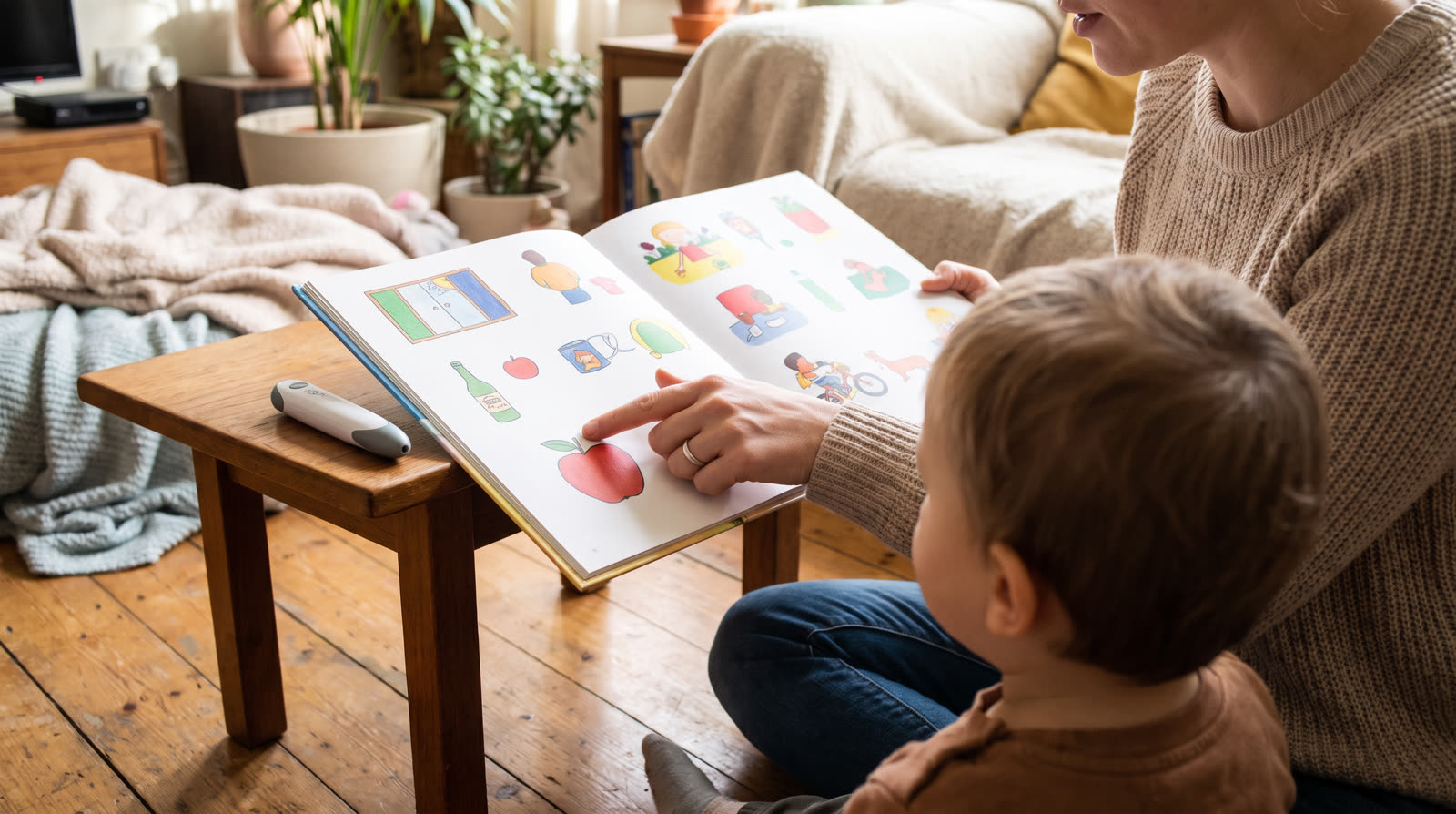
| Vocabulary or listening | Repeat a meaningful word in a picture and a real-life context | That replay alone produces retention or comprehension |
| Pronunciation confidence | Model a word warmly and allow optional repetition | That the product corrects or treats speech |
| Independent habits | Gradual routines with adult setup and follow-up | That independence is appropriate at every age or stage |
The adult-child interaction remains more important than feature count.
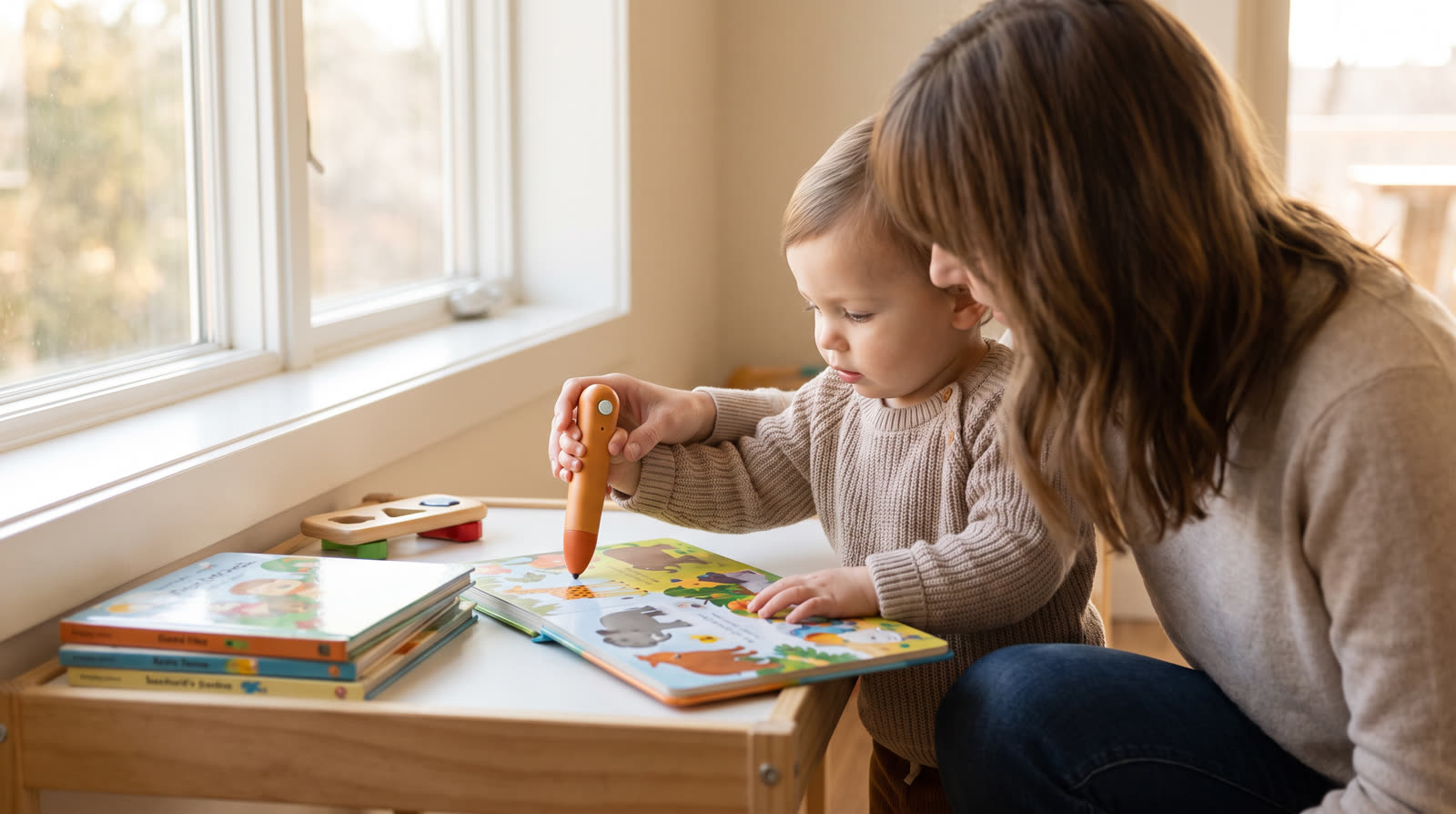
Choose a short book moment, let the child point or choose a page, use the audio as a prompt, and then respond with conversation. Ask what the child notices, connect a word to an everyday experience, and stop while engagement is still positive.
When to Ask for Additional Support
If communication, hearing, reading, or development concerns persist, discuss them with a qualified educator or clinician. A product is not a diagnostic or treatment tool.
References
Continue with ReadGlo
See a DOT-code picture-book set designed for guided early-learning programs.