
Contents
Quick Answer
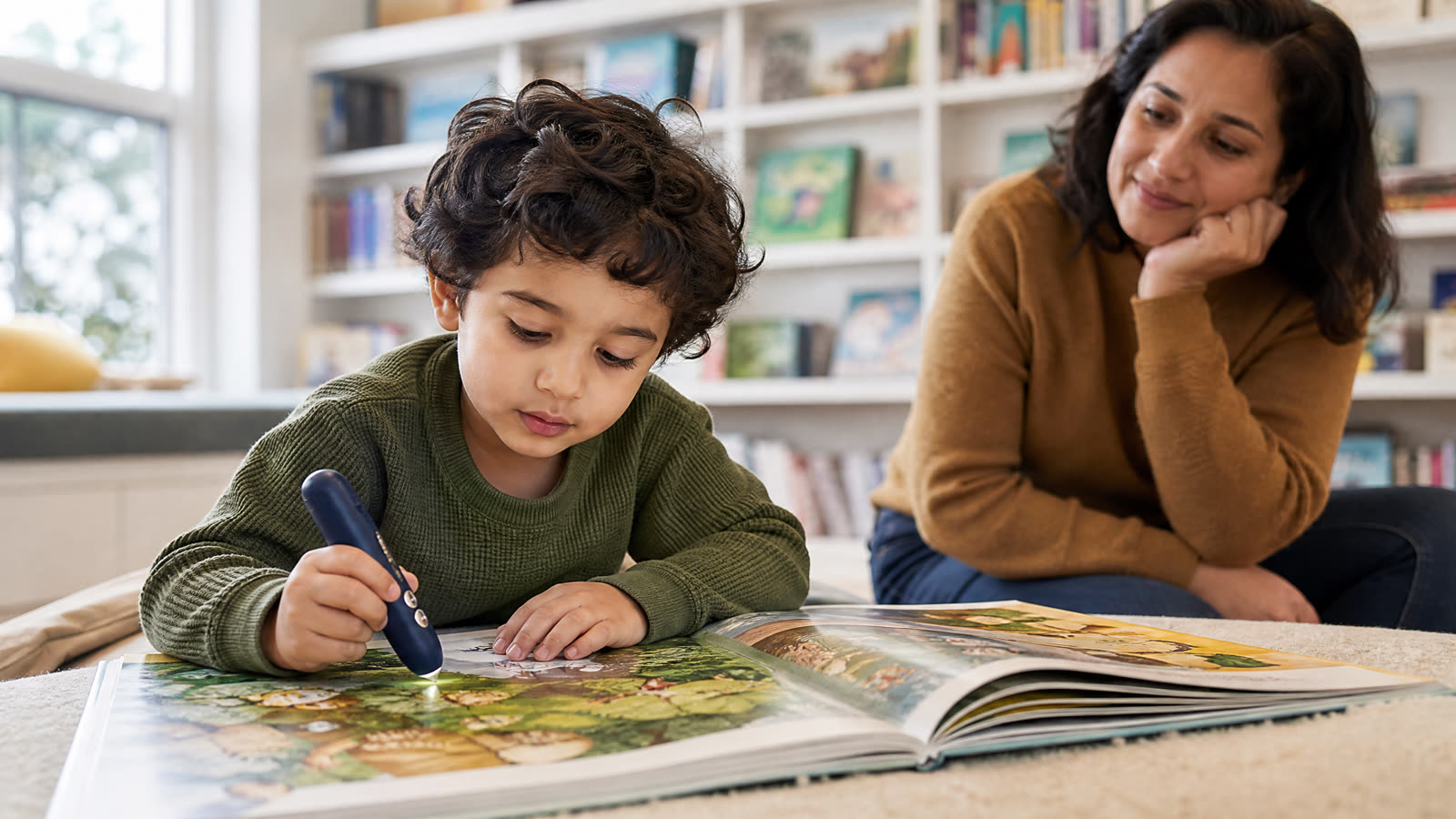
A reading pen and talking picture book can support a 4- to 5-year-old’s emerging independence when it complements rather than replaces shared reading and hands-on language play. For independent use, the useful question is not whether a device can do the activity alone, but whether the book-and-pen experience helps create a responsive, safe, and enjoyable reading interaction. Adults should set up the content, observe whether the level is engaging, and step in to extend vocabulary, answer questions, or change the activity when needed.
What Does Independent Use Look Like at This Age?
| Decision area | What to look for | Adult’s role |
|---|---|---|
| Age and handling | 4- to 5-Year-Old readiness for the product’s physical format and stated age label | Check instructions, set up safely, and stay involved at the level the child needs |
| Reading purpose | building a small, manageable routine where the child can choose a familiar book and use a clearly taught feature | Independence should be gradual: adults set up the product, check safety and content, and remain nearby according to the age label and the child’s readiness. |
| Book content | Sturdy, culturally relevant, picture-rich books with a manageable amount of language | Choose a small set of books and return to favorites |
| Session rhythm | Short, responsive sessions shaped by attention and interest | Pause, talk, point, and finish early when the child is done |
Use this as a discussion guide. Always follow the product’s specific age grade, warnings, and instructions.
Choose content with clear stories, playful sounds, opportunities to retell, and age-appropriate sound-letter or bilingual activities. The activity should be adjusted to the child’s attention, movement, communication, and willingness to participate. Building a small, manageable routine where the child can choose a familiar book and use a clearly taught feature is more helpful than pushing the child to finish a specific number of pages.
How an Adult Can Make the Experience More Meaningful
Independence should be gradual: adults set up the product, check safety and content, and remain nearby according to the age label and the child’s readiness. During reading, pause to respond to gestures, sounds, and words. For infants and toddlers, NAEYC describes read-alouds as serve-and-return interactions; an adult can share a few pages, name pictures, and respond to the child’s interests. [3]
Product and Safety Boundaries
Always follow the specific pen and book set’s age grade, warnings, charging instructions, and care guidance. Keep rechargeable devices and accessories under adult management where required. This article does not establish a safety rating for any particular product; a child’s actual readiness and the manufacturer’s instructions remain central.
A Simple Routine to Try
Choose one predictable moment — for example, after breakfast, before a nap, or at bedtime. Offer a small book choice, invite one or two turns, and let the child stop when interest fades. The AAP recommends shared reading beginning in early life and encourages language-rich engagement with books, pictures, and written words. [1]